The Perfolio Blog
Notes on building a career record that survives job changes, promotion committees, and an AI agent doing half your work.

Your Manager Gets 90 Seconds to Defend You in Calibration. What Ammo Did You Actually Give Them?
A room of fifteen managers, two promotion slots, and ninety seconds to pitch your entire year. If your manager has to hunt through your brag doc for proof, you have already lost.
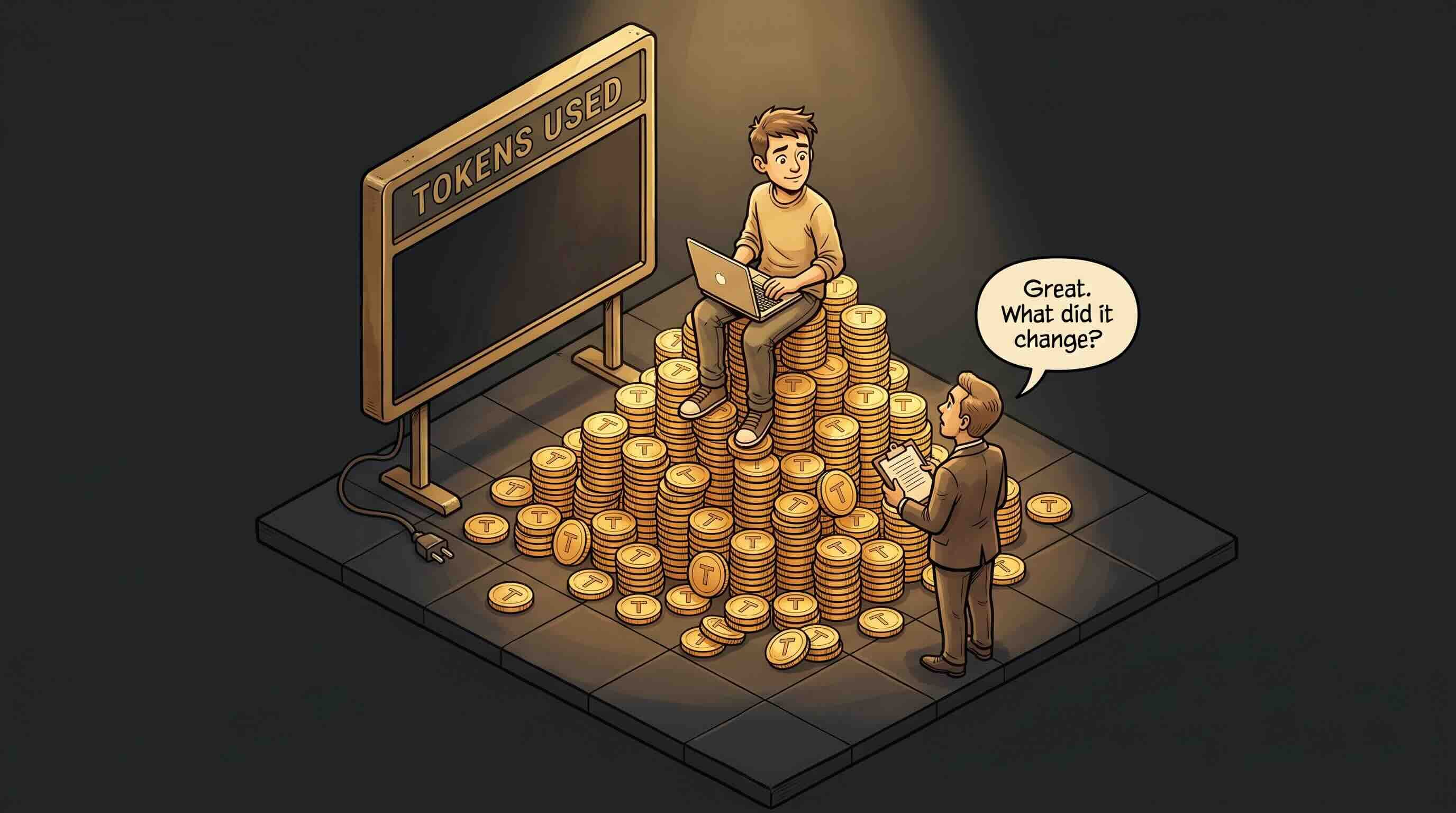
Meta Graded Us on Tokens. Then It Stopped. Nobody Told Us What Counts Instead.
For a year, AI usage was the easiest number in your review. Meta just took it out. The bar went back to impact, and most of us have no record of ours.

Why Would You Pay for Software You're Not Allowed to Look At?
A VP asked what he'd get to see if he bought Perfolio for two hundred engineers. The honest answer was nothing, and that turns out to be the entire point.
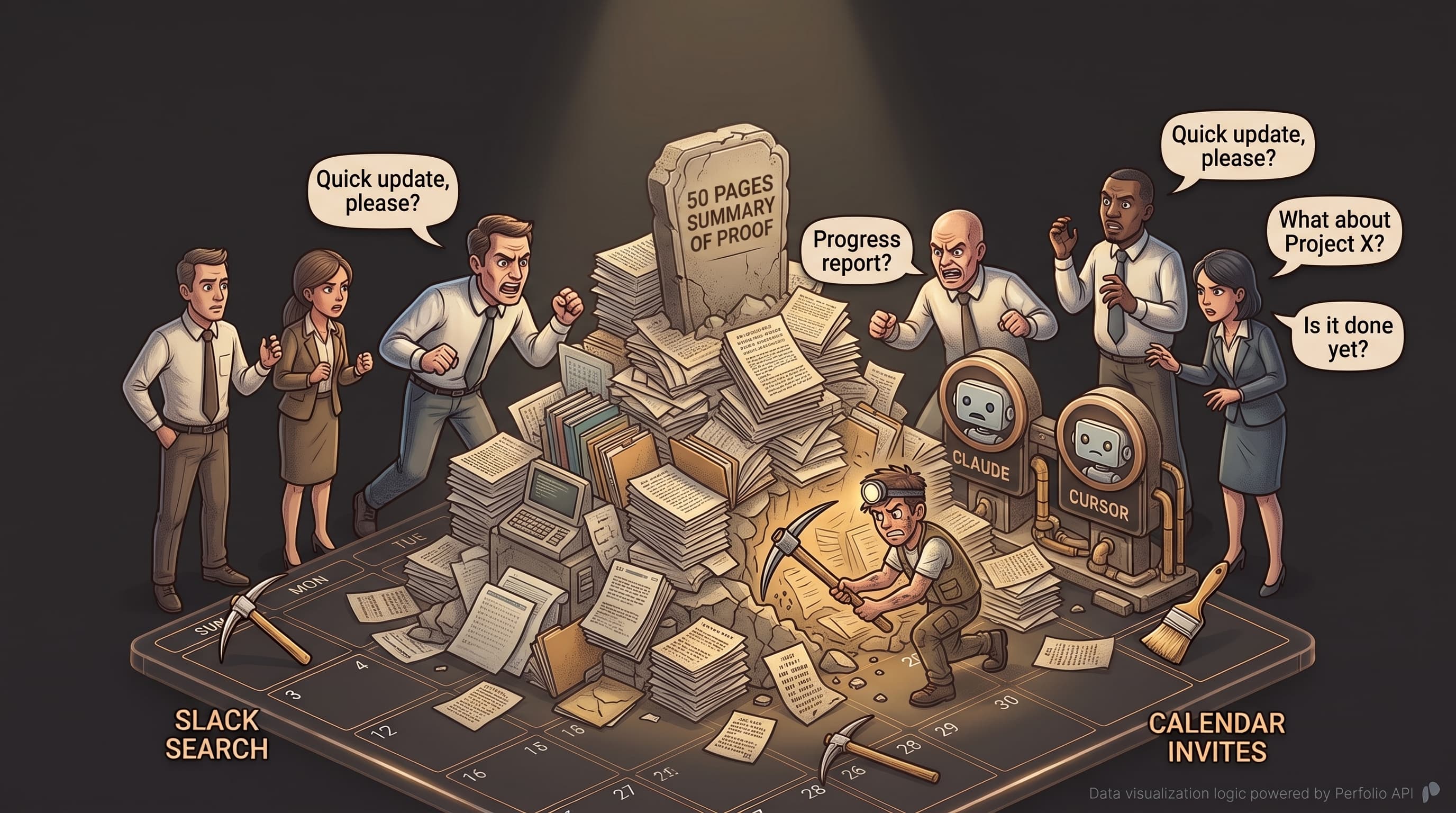
I Spend More Time Reporting My Work Than Anyone Spends Reading It.
Someone always wants an update, and finding what I actually did takes longer than the work did. Now multiply that by every project you're on.
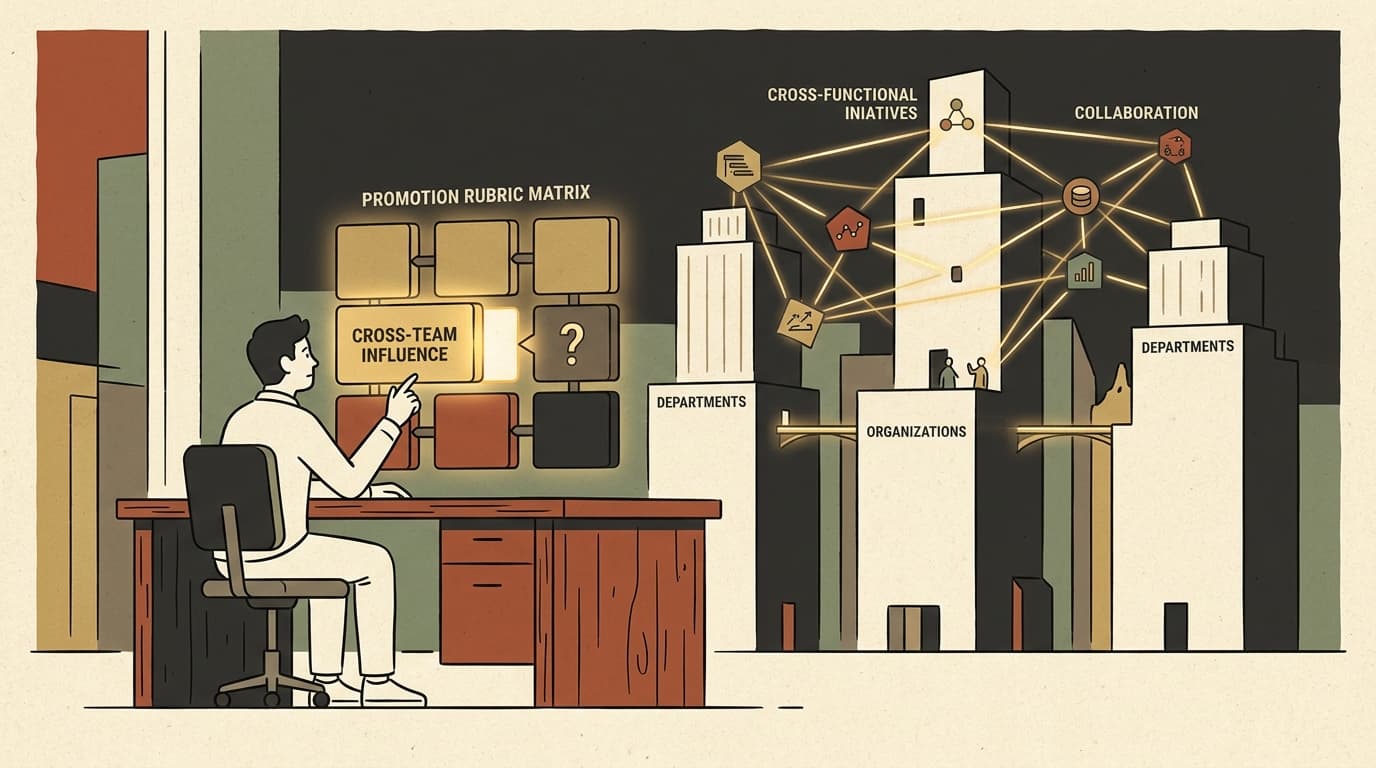
My Rubric Told Me I Was Thin on Influence. It Didn't Tell Me Where to Find Any.
My review told me I was thin on cross-org influence. It was right. It just couldn't tell me where influence was supposed to come from, and I kept waiting to be invited instead of going to look.
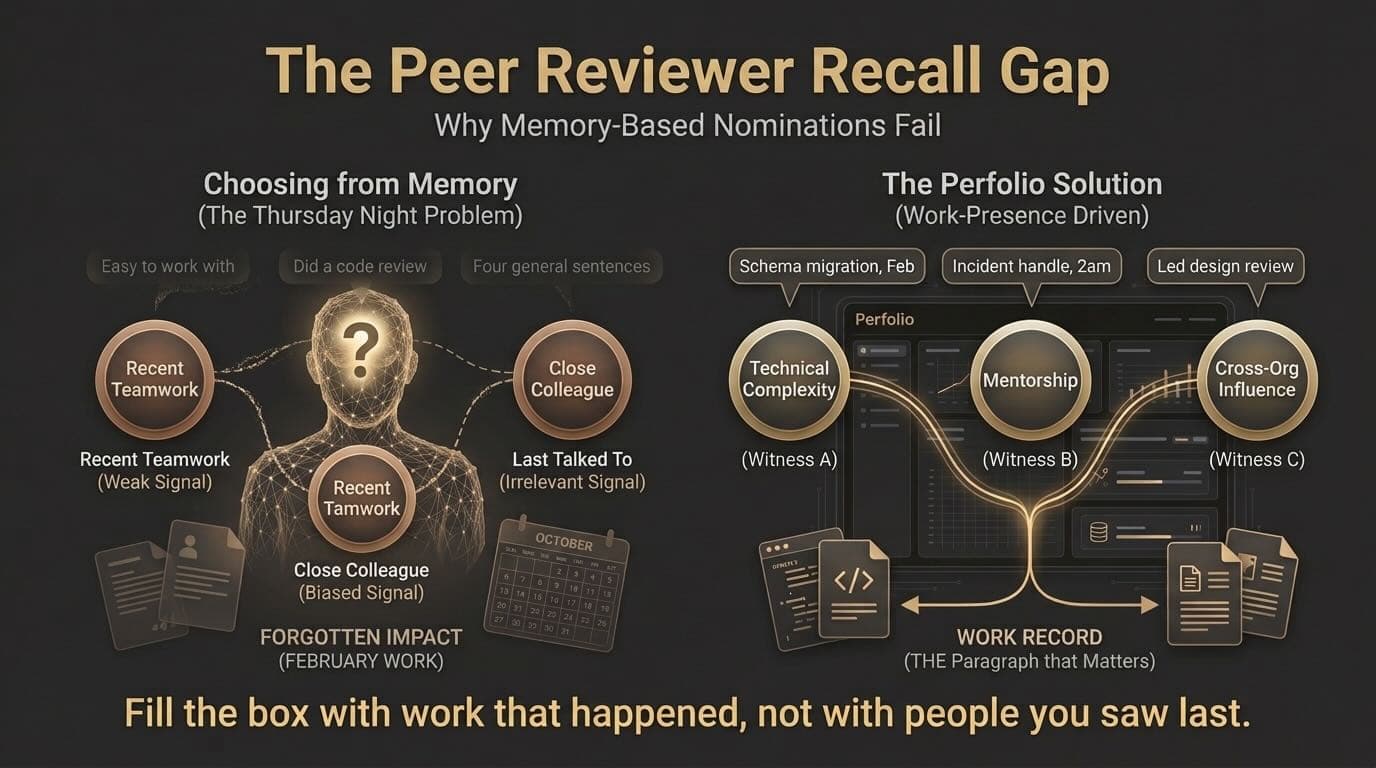
I Picked My Peer Reviewers From Memory. I Picked Wrong.
My company asked me to name three people who could speak to my work. I named the three I had talked to most recently, and left out the one who saw the work that mattered.
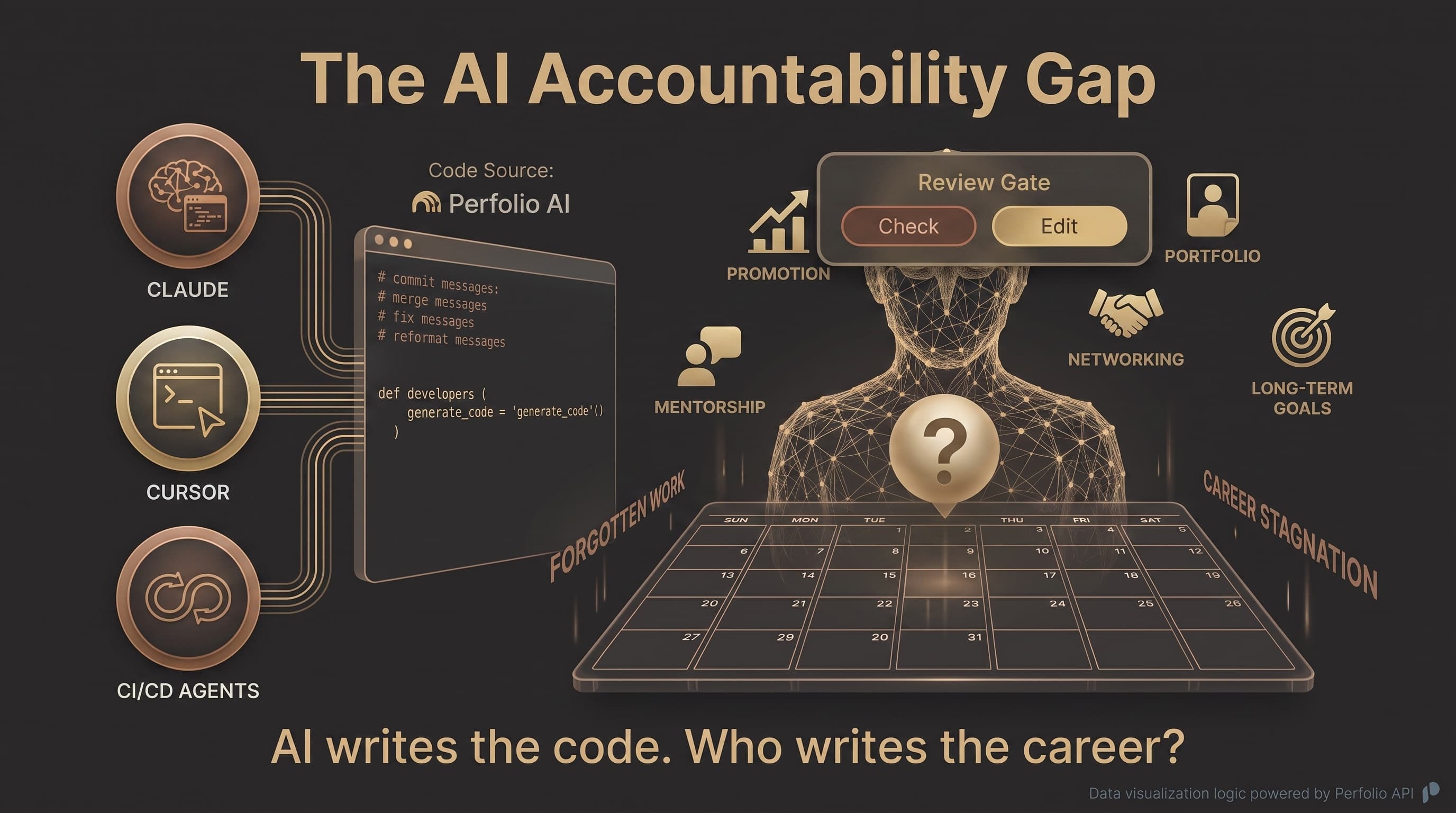
I Let My AI Agents Ship for Six Months. I Still Couldn't Say What I Did.
Cursor, Claude Code, and a CI agent shipped more than I ever did by hand. When review season came, I had a git log and no idea what any of it meant.
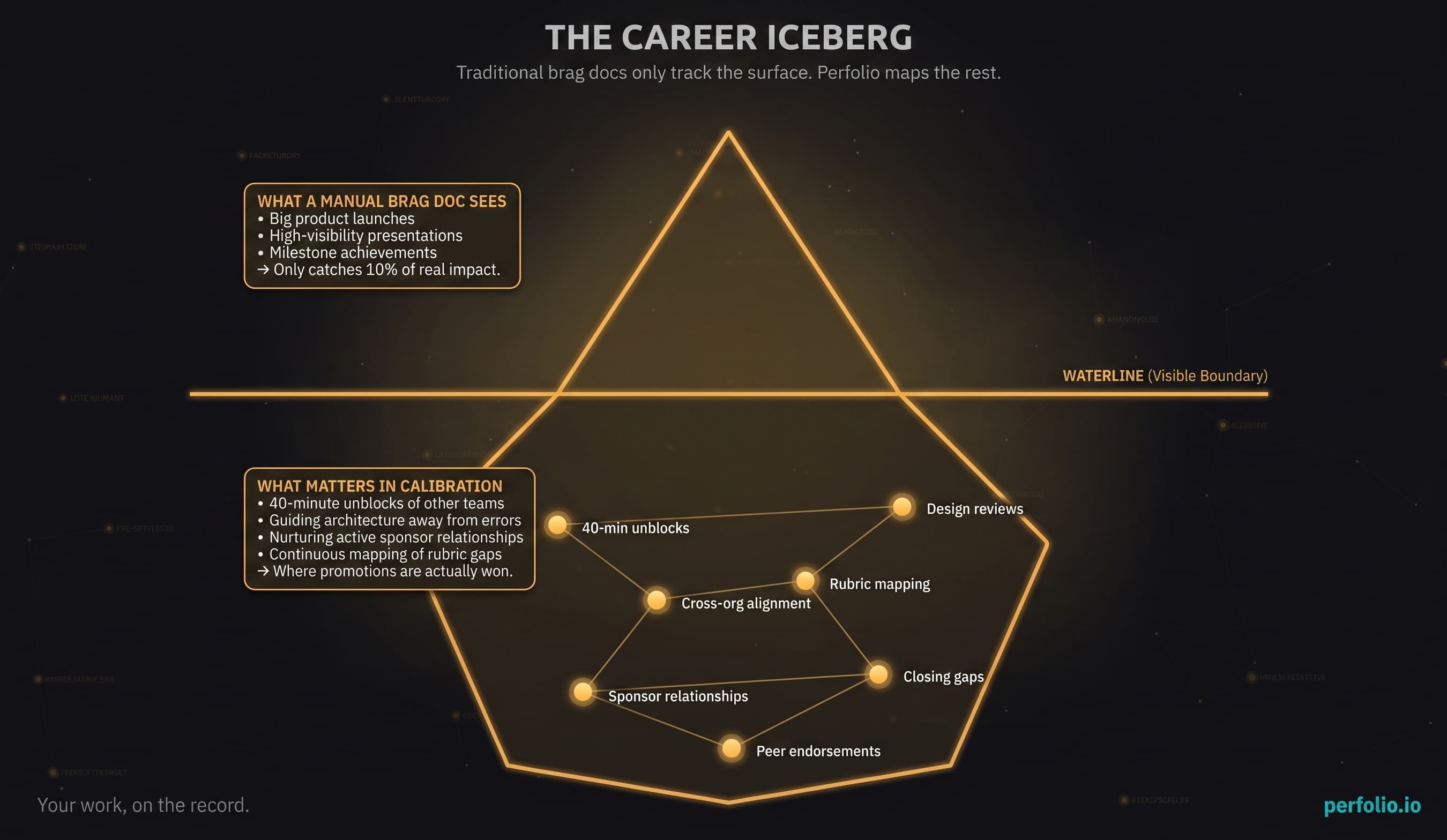
Your Brag Doc Is Failing You!
Two years of brag docs, forgotten follow-ups, and pasting notes into an LLM to check my own promotion rubric. Here's why that still wasn't enough.